Showing posts with label Children's Literature. Show all posts

Sunday, July 27, 2014

Travel Light by Naomi Mitchison

Title: Travel Light
Author: Naomi Mitchison
Orignal Publication Date: 1952
Publisher: --
Pages: 157
Genre/s: Fantasy, Children's Literature


Travel light my child, as the Wanderer travels light, and his love will be with you."(57)
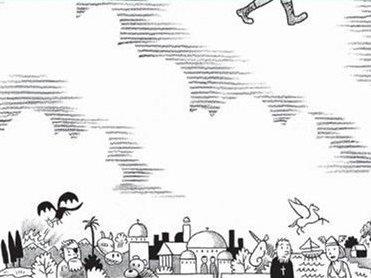
description
Travel Light

Travel Light tells the story of Halla, a girl born to a King, who will also take the very same gift that was given, for he casts her out into the wilds before any words could be spoken. She is nursed by bears and raised by dragons. But the time of dragons has come to past and magic is waning, our dear Halla is destined to make a choice. Who will she be? Halla Bearsbairn? Halla Heroesbane? or Halla Godsgift?

But this is not what Travel Light is simply all about.

“Perhaps she did not die,” said Halla, “perhaps her nurse turned into a bear and carried her away into the forest. Perhaps she was brought up by bears and dragons. Perhaps it was better for her in the end than being a king’s child.”

“That was never the story,” said Modolf.

“Forget the story,” said Halla.
(139)

And indeed it was never the story, just as Travel Light is not a simple children's book. It is about 'traveling light' in a muddled and muddied world, defining your own destiny and in the process finding yourself.

Indeed the story moves with Halla's narrative. The episodic story moves between and beyond conventions and structures of the literary landscape. It seemingly starts out as a didactic fable with Halla’s bearish infancy. In this episode Mitchison grounded the work to Nordic Mythos with the occasional appearances of Valkyries and passing mentions of other Nordic legends. But this didactic fable violently veers off to a dragonish fire-proof adolescence, and with it, the very nature of the narrative. Aside from an amusing discussion of dragons’ distinctive hoarding nature, Mitchison delves into human nature and philosophy and moves from Scandinavian landscape of Paganism to the heart of Constantinople and of Christianity. It is important to note that the Nordic Mythos facet of the tale is never lost as the Valkyrie seems to keep appearing intermittently. As the tale which did not provide a clear span and flow of time (for it would seem that a hundred, thousand years even, have come to past) comes to a close, Halla is seen as a mythic figure herself and the nature of the narrative ends where it starts, Nordic mythology.

As one can see, so much is in work here. Mitchison talks about human nature, beliefs systems and religion, but never, as I felt, did she shove it up to me. I felt that she kept true to the one thing she wanted to impart, ‘Travel Light’ and do so by being good to all. It has no form and defies the traditional linear progressions but I still enjoyed its exceptional and unprecedented transition from a fable-like story to a socio-political examination of human belief and dynamics, again in a sense, by ‘travelling light’, by simplifying matters and driving at its core.

I highly recommend this book, and do so while weeping that it suffers in relative obscurity considering how good it is. Perhaps because it was publish in the era of Tolkien and Lewis? The shadows they have cast have inadvertently and yet effectively laid down a shroud of obscurity over works like this, which is interesting in light of Mitchison’s relation to Tolkien. She was a dear friend to Tolkien, was among the first to read the unpublished The Lord of the Rings, and when the said book suffered from poor reception compared to the then anticipated sale, Mitchison was asked to do blurbs for its marketing promotions.


Naomi Mitchison

Mitchison must have been an exciting and principled individual too! She traveled the world engaging in social activism mostly fighting for Indigenous Communities, to which end, she was adopted as adviser and mother of the Bakgatla Tribe in Botswana. She died in 1999 at the age of 101, if anything; Mitchison herself indeed, ‘traveled light’.

Travel light!

Thursday, May 1, 2014

The Girl Who Circumnavigated Fairyland in a Ship of Her Own Making (Fairyland, #1) by Catherynne Valente

Title: The Girl Who Circumnavigated Fairyland in a Ship of Her Own Making (Fairyland, #1)
Author:  Catherynne Valente
Publisher: Feiwel & Friends
Original Publication Date: May 10, 2011
Pages: 247

“Make it a rule never to give a child a book you would not read yourself.” 
― George Bernard Shaw

I love reading, and I want my future children, and my future children’s children to love it too. I cannot however, just as any form or object of love, force them to love it too, what I can do however is guide them in learning to love it, by helping them sort through the millions of books out there, directing them to the good ones, to the really really good ones. The Girl Who Circumnavigated Fairyland in a Ship of Her Own Making now occupies a special place in that future for my children. This goes to show that I too enjoyed this book. 

The book’s narration shifts back and forth from an omniscient narrator to the second person point of view. The usage of the technique is wonderful. It radiates the feeling that the book itself is telling you the story, an aspect that perhaps highlights the book’s age appropriateness as a children’s literature. The narration gives of a lively, vibrant and engaging narration. There are a lot of references to creatures of fantasy both familiar and unique to the book which is in keeping to its general plot. These creatures however are vividly portrayed in manner that will not give children the nightmares. I do not recall encountering big words, jargons, or technical definitions. The conversations were natural, crisp and direct. What sets this book apart from most children’s lit is the prose with which Valente wrote in. It is neither an exaggeration nor romanticism in play when I say that this is one of the most fluid and beautiful prose I’ve have read. The book cover and the drawings are adorable. The book’s entirety is simply riveting. 

As most children’s books go, this is no exception to its class in its distinctive features in respect of the substance and weight of its message, subtlety in delivery of that message and of course the conclusion, to which I am reminded again that it is us, adults who have suffered through a decadence of belief and imagination, who need dumbing downs in our daily serving of dreams, fantasy, and literature. Let me liberally quote statements from the book which adults know of as reality.


“And she definitely wanted to get somewhere, even if she didn’t know where somewhere was. (25)”

“But splendid things are often frightening. Sometimes, it’s the fright that makes them splendid at all. (39)”


And one of my personal favorites…
“When you are born,” the golem said softly, “your courage is new and clean. You are brave enough for anything: crawling off of staircases, saying your first words without fearing that someone will think you are foolish, putting strange things in your mouth. But as you get older, your courage attracts gunk and crusty things and dirt and fear and knowing how bad things can get and what pain feels like. By the time you’re half-grown, your courage barely moves at all, it’s so grunged up with living.(56)”

“Of course not. No one is chosen. Not ever. Not in the real world. You chose to climb out of your window and ride on a Leopard. You chose to get a witch’s Spoon back and to make friends with a Wyvern. You chose to trade your shadow for a child’s life. You chose not to let the Marquess hurt your friend—you chose to smash her cages! You chose to face your own death, not to balk at a great sea to cross and no ship to cross it in. And twice now, you have chosen not to go home when you might have, if only you abandoned your friends. You are not the chosen one, September. (162)”


These are some of the messages in this book to which pales however to the message its entirety seeks to impart, that of loving, losing and letting go. Truly it is a masterpiece to deliver this kind of real life lessons in a medium such as children’s book and still convey it without loss of substance. I will be looking forward to the other books in this series with delight, designate a special place in my future children’s book shelves and definitely recommend it to someone looking for a delightful read.  

Monday, April 14, 2014

The Last Unicorn by Peter S. Beagle

Title: The Last Unicorn
Author: Peter S. Beagle
Publisher: Viking Press
Original Publication Date: 1968
Pages: 294

Beautiful. Beautiful. Pure soulful beauty. Though I still find it hard that this is compared to Tolkien's The Hobbit. Things lose their luster when they are compared. No. There is no need for comparison here. Still, this is beautiful enough on its own that it must and should be read by every fantasy genre fan.