Showing posts with label Fantasy. Show all posts

Sunday, July 27, 2014

Travel Light by Naomi Mitchison

Title: Travel Light
Author: Naomi Mitchison
Orignal Publication Date: 1952
Publisher: --
Pages: 157
Genre/s: Fantasy, Children's Literature


Travel light my child, as the Wanderer travels light, and his love will be with you."(57)
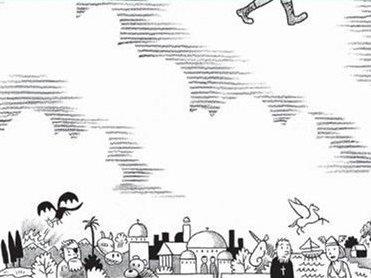
description
Travel Light

Travel Light tells the story of Halla, a girl born to a King, who will also take the very same gift that was given, for he casts her out into the wilds before any words could be spoken. She is nursed by bears and raised by dragons. But the time of dragons has come to past and magic is waning, our dear Halla is destined to make a choice. Who will she be? Halla Bearsbairn? Halla Heroesbane? or Halla Godsgift?

But this is not what Travel Light is simply all about.

“Perhaps she did not die,” said Halla, “perhaps her nurse turned into a bear and carried her away into the forest. Perhaps she was brought up by bears and dragons. Perhaps it was better for her in the end than being a king’s child.”

“That was never the story,” said Modolf.

“Forget the story,” said Halla.
(139)

And indeed it was never the story, just as Travel Light is not a simple children's book. It is about 'traveling light' in a muddled and muddied world, defining your own destiny and in the process finding yourself.

Indeed the story moves with Halla's narrative. The episodic story moves between and beyond conventions and structures of the literary landscape. It seemingly starts out as a didactic fable with Halla’s bearish infancy. In this episode Mitchison grounded the work to Nordic Mythos with the occasional appearances of Valkyries and passing mentions of other Nordic legends. But this didactic fable violently veers off to a dragonish fire-proof adolescence, and with it, the very nature of the narrative. Aside from an amusing discussion of dragons’ distinctive hoarding nature, Mitchison delves into human nature and philosophy and moves from Scandinavian landscape of Paganism to the heart of Constantinople and of Christianity. It is important to note that the Nordic Mythos facet of the tale is never lost as the Valkyrie seems to keep appearing intermittently. As the tale which did not provide a clear span and flow of time (for it would seem that a hundred, thousand years even, have come to past) comes to a close, Halla is seen as a mythic figure herself and the nature of the narrative ends where it starts, Nordic mythology.

As one can see, so much is in work here. Mitchison talks about human nature, beliefs systems and religion, but never, as I felt, did she shove it up to me. I felt that she kept true to the one thing she wanted to impart, ‘Travel Light’ and do so by being good to all. It has no form and defies the traditional linear progressions but I still enjoyed its exceptional and unprecedented transition from a fable-like story to a socio-political examination of human belief and dynamics, again in a sense, by ‘travelling light’, by simplifying matters and driving at its core.

I highly recommend this book, and do so while weeping that it suffers in relative obscurity considering how good it is. Perhaps because it was publish in the era of Tolkien and Lewis? The shadows they have cast have inadvertently and yet effectively laid down a shroud of obscurity over works like this, which is interesting in light of Mitchison’s relation to Tolkien. She was a dear friend to Tolkien, was among the first to read the unpublished The Lord of the Rings, and when the said book suffered from poor reception compared to the then anticipated sale, Mitchison was asked to do blurbs for its marketing promotions.


Naomi Mitchison

Mitchison must have been an exciting and principled individual too! She traveled the world engaging in social activism mostly fighting for Indigenous Communities, to which end, she was adopted as adviser and mother of the Bakgatla Tribe in Botswana. She died in 1999 at the age of 101, if anything; Mitchison herself indeed, ‘traveled light’.

Travel light!

Thursday, May 29, 2014

The Alchemist by Paulo Coelho

Title: The Alchemist
Author: Paulo Coelho
Original Publication Date: 1988
Pages: 197


Only the devil will leave you in a waiting room for three hours without any reading material. So I took this as an omen and went ahead and looked for a new dentist. But before I found one, the Soul of the World orchestrated the natural flow of things so that I should come across a copy of this book, and my diaphanous frustration compelled me to buy and read this work I've avoided until today. I have this particular belief that books I see in most houses that I've been to, if not all, are overrated. To me, The Alchemist was no exception. I read it under 3 or 4 hours which is probably because of the simplicity both in the story and in the prose, both were straightforward and linear. But it was nothing like Hemingway's style. It is retrospective but please, do not even imagine comparing this work to Siddhartha(4 Stars), as some people have the apparent audacity to do. Siddhartha is the work you read to experience a trance-like retrospective examination of life, in comparison, the only thing that made its mark in The Alchemist was the fantasy part, which I have to admit I see as a considerable digression for a ruminative retrospective novel. It does talk about love as the universal language of the world, that all of us are one but I had this feeling that The Alchemist barely scratched the surface of this reservoir of ruminative philosophy which led to an occasional overtly pretentious and over-reaching feel. Coelho's telling us that the happiness we seek is within us, as evinced by how this novel started and ended, what I can't curiously reconcile however is the fact that it was someone else's dream that completed his journey, as if negating the very message it seeks to impart. Just my two cents anyway.

Saturday, May 24, 2014

Lord Valentine's Castle (Lord Valentine #1) by Robert Silverberg

Title:Lord Valentine's Castle (Lord Valentine #1)
Author: Robert Silverberg
Original Publication Date: 1980
Pages: 506

"Conquest over self was the finest of victories."(467)

It pains me that this book is languishing in undeserved obscurity. 

Lord Valentine's Castle follows the journey of Valentine, devoid of any semblance of identity and perhaps irretrievably deprived of indescribably defining memories, living a wanderer’s life, joining a band of jugglers, learning the trade in the only way it was meant to be learned, by heart and soul, and comes to the realization that he has fallen from the highest possible state of grace, comes to the inevitable understanding that he must journey to reclaim what he has lost, not for himself, but for the safety and order of Majipoor.

This is a journey of one man, his quest to define himself, as much as it is a voyage through the world of Majipoor. And it is splendid.

It is splendid because Silverberg is unlike most fantasy writers. This book is not filled with fantasy tropes and cliché plot devices. No. There are no dwarves, elves and well-defined magical schemes, no epic wars, but there are dragons! Like Ursula Le Guin, in the A Wizard of Earthsea, the struggle is much more personal, and to expect a diluted brilliance in this work is but a folly one must dispense with.  As I have written in my review on the first book of the Earthsea Cycle which is suitably in consonance with my views on this book,“what is most fascinating in this unique work of fantasy is how personal and particular the main struggle is and yet it carries a worldly importance to the book. The perpetuation of the grand narratives of good against evil, or of the prosaic if not routinary overblown dilemmas of kings and men have endeavored to situate if not relegate this grand personal struggle everybody must go through in the background as mere subplots at the best and at worst as plot devices, never really brought in the forefront.” And I like this kind of books, not only because of the inherent mastery with which it is delivered but it reflects

Silverberg’s vehemence and audacity at writing out of the banalities in fantasy writing. This he achieved by masterfully incorporating a bit of sci-fi background in this world and highlighting the power of dreams to list a few, and of course envisioning our lovely charismatic engaging Valentine to be black.I revel in the fact that the protagonist in this was envisioned to have had dark skin. For it is not so much as the color of the skin that talks but of the profound meaning and effect it carries concerning minute details of vital necessity not only in the fantasy genre but of printed work generally… for most fantasy plots are patterned if not derived from the middle ages of conquest where the dichotomy of the white and black or of the east-west conflict is fundamentally translated to good and bad respectively and the stratification of the social class is at its height..’’ Authors like this must be read!

Silverberg’s world building is exceptionally extensive and my imagination was left in no less a euphoric state given the way he wrote. His was so detailed, so wonderful, so mesmerizing. Not only were the cities strangely unique and uncompromisingly beautiful, they were real, they were real in the manner that Silverberg wanted them to be, as if you were there, standing before the gates of the city, drunkenly dazzling at the beauty of this alien world. Just as a painter masterfully but with adamant care puts life into the canvass with those slow adroit masterful strokes of genius, so does Silverberg conjures Majipoor to life with his phrases, sentences and paragraphs. And this world building in effect makes Valentine’s journey more empathic, and I would easily pledge my loyalty to this unprecedentedly deposed Coronal, even though most of his travels are uneventful compared to most fantasy books, I will choose to be beside this man and enter Majipoor once again.


This book is part of my LOCUS AWARDS reading list.

Thursday, May 1, 2014

The Girl Who Circumnavigated Fairyland in a Ship of Her Own Making (Fairyland, #1) by Catherynne Valente

Title: The Girl Who Circumnavigated Fairyland in a Ship of Her Own Making (Fairyland, #1)
Author:  Catherynne Valente
Publisher: Feiwel & Friends
Original Publication Date: May 10, 2011
Pages: 247

“Make it a rule never to give a child a book you would not read yourself.” 
― George Bernard Shaw

I love reading, and I want my future children, and my future children’s children to love it too. I cannot however, just as any form or object of love, force them to love it too, what I can do however is guide them in learning to love it, by helping them sort through the millions of books out there, directing them to the good ones, to the really really good ones. The Girl Who Circumnavigated Fairyland in a Ship of Her Own Making now occupies a special place in that future for my children. This goes to show that I too enjoyed this book. 

The book’s narration shifts back and forth from an omniscient narrator to the second person point of view. The usage of the technique is wonderful. It radiates the feeling that the book itself is telling you the story, an aspect that perhaps highlights the book’s age appropriateness as a children’s literature. The narration gives of a lively, vibrant and engaging narration. There are a lot of references to creatures of fantasy both familiar and unique to the book which is in keeping to its general plot. These creatures however are vividly portrayed in manner that will not give children the nightmares. I do not recall encountering big words, jargons, or technical definitions. The conversations were natural, crisp and direct. What sets this book apart from most children’s lit is the prose with which Valente wrote in. It is neither an exaggeration nor romanticism in play when I say that this is one of the most fluid and beautiful prose I’ve have read. The book cover and the drawings are adorable. The book’s entirety is simply riveting. 

As most children’s books go, this is no exception to its class in its distinctive features in respect of the substance and weight of its message, subtlety in delivery of that message and of course the conclusion, to which I am reminded again that it is us, adults who have suffered through a decadence of belief and imagination, who need dumbing downs in our daily serving of dreams, fantasy, and literature. Let me liberally quote statements from the book which adults know of as reality.


“And she definitely wanted to get somewhere, even if she didn’t know where somewhere was. (25)”

“But splendid things are often frightening. Sometimes, it’s the fright that makes them splendid at all. (39)”


And one of my personal favorites…
“When you are born,” the golem said softly, “your courage is new and clean. You are brave enough for anything: crawling off of staircases, saying your first words without fearing that someone will think you are foolish, putting strange things in your mouth. But as you get older, your courage attracts gunk and crusty things and dirt and fear and knowing how bad things can get and what pain feels like. By the time you’re half-grown, your courage barely moves at all, it’s so grunged up with living.(56)”

“Of course not. No one is chosen. Not ever. Not in the real world. You chose to climb out of your window and ride on a Leopard. You chose to get a witch’s Spoon back and to make friends with a Wyvern. You chose to trade your shadow for a child’s life. You chose not to let the Marquess hurt your friend—you chose to smash her cages! You chose to face your own death, not to balk at a great sea to cross and no ship to cross it in. And twice now, you have chosen not to go home when you might have, if only you abandoned your friends. You are not the chosen one, September. (162)”


These are some of the messages in this book to which pales however to the message its entirety seeks to impart, that of loving, losing and letting go. Truly it is a masterpiece to deliver this kind of real life lessons in a medium such as children’s book and still convey it without loss of substance. I will be looking forward to the other books in this series with delight, designate a special place in my future children’s book shelves and definitely recommend it to someone looking for a delightful read.  

Monday, April 14, 2014

Tehanu (The Earthsea Cycle #4) by Ursula K. le Guin

Title: Tehanu (The Earthsea Cycle #4)
Author Ursula K. Le Guin
Publisher: Atheneum Books
Original Publication Date: June 20, 1990
Pages: 294


It is surprising that it has taken Le Guin up to the fourth book to bring to the forefront one of the most conspicuous and prevalent  inequities not only in the fantasy genre but more importantly in the living world, that is inequity between the sexes.

Le Guin's writing aside from boasting of incomparable depth, truth and weight is exceptionally fluid. Tehanu is surprising in respect with the presentation of the themes in the book in that some almost felt like that they are forced rather than something that has come naturally. Perhaps this is by reason that Le Guin was severely criticized for not touching sexism up until this point or that the Earthsea cycle was originally slated only for three books. Some transitional points are also rather quirky.

On page 242 Ged and Tenar's conversation

“Well,” she said, “which bed shall I sleep in, Ged? The child’s, or yours?”
He drew breath. He spoke low. “Mine, if you will.”
“I will.”

Suddenly the inhibitions are all forgotten. What happened to about a hundred pages of inhibitions, subtle refusals and of repressions? I guess pent-up sexual tension can only be held so much, even in books.

Ged has been built up as the proverbial Archmage, full of wisdom, the seemingly cradle of power. So when he gave up his arts, and ended up perpetually depressed and moping at what has been, it was somehow inconsistent with the man that has been painted (this is more of a personal dislike rather than an objective point). Though i guess this is one of the more elegiac themes albeit  of real life importance that Le Guin presents (considering further what characterizes her writing). And one she presents as veracious as possible I might say.

At the risk of being redundant, the Earthsea cycle is not for those of fantasy readers that seek excitement and action. The books contain a diminutive portion of these servings, they are enjoyable, and I could only wish that Le Guin expanded this portions however meager. Alas, this was not the end she sought.

The Last Unicorn by Peter S. Beagle

Title: The Last Unicorn
Author: Peter S. Beagle
Publisher: Viking Press
Original Publication Date: 1968
Pages: 294

Beautiful. Beautiful. Pure soulful beauty. Though I still find it hard that this is compared to Tolkien's The Hobbit. Things lose their luster when they are compared. No. There is no need for comparison here. Still, this is beautiful enough on its own that it must and should be read by every fantasy genre fan.

Thursday, September 5, 2013

The Worm Ouroboros by E.R. Eddison

Title: The Worm Ouroboros
Author: Eric Rücker Eddison
Publisher: Jonathan Cape
Original Publication Date: 1922
Pages: 446

To say that The Worm Ouroboros has bolstered my love for the classics, is to strain credulity, for I have devoted much time going through the 49 pages more than I would have wanted to.

A plain reason why 'classics,' or in a more encompassing sense, early works in literature experience a fallout, at its more merciful dispositions, has something to do with the language it has been couch with. The philosophies that give life to the plot, the mythologies in the origin of the story, the psychologies of the characters, be they stupidly consistent or brilliantly logical, are all contained in the language. Failure must not exists in the basic and most vital component of a book, lest it be fatal. Language, one might say, would be the shell of the book by which it is most peremptorily judged, just as how The Worm Ouroboros came out to be. (Perhaps this too contribute to the proliferation of YA novels, they are as simple and easy as they could possibly be - although this statement is in danger of suffering from generalization)

I look forward, knowing that a moment will come when i should once again pick this book up, not only giving justice to the words Tolkien have immortally left with it, but to knowing, at last, the merits it contain. Till then, unrated it will be left.

The Weird of the White Wolf by Michael Moorcock

I was giddy picking this book up. I was looking for a good series in the field of epic fantasy after reading full blown novels and saw that the Elric series is revered in the genre. I finished the two books and did not stop until well within the third of the series. However, the seemingly unprecedented fears of reading Moorcock and the Elric saga emerging within the second book (which for me) seemed to have been nothing but unfounded was embossed within the third books as if fundamentally attached to the series, at best, and at worst, with Moorcock's writing. I place a caveat as need be. I did not read the succeeding books in the series, nevertheless, I will carry on, with intrepid audacity, rendering a review that would seem conclusive for the entirety of the Elric saga. Who knows, the edit button is never far from reach if i may chance to pickup the other books in the series, which i doubt with great veracity.

Elric was off at a good start, if I can remember, Elric is the first antihero scheme i have read under the genre. In hindsight, it proved disheartening. The series lacked the grandiosity that is fantasy (for me, defines books under the fantasy genre). The world building, which is vital to a fantasy series categorically failed. Conceivably due to the fact that the series' books are almost always composed of three novellas rather than being a single composite work. Withal, Moorcock did not seem to have deliberately expounded on his world building aside from laying the essential necessities of the Elric series. The character/story arc, although credited as idiomatic as it were, just went too wide losing sight of the main arc. They were entertaining yes but in the end it leaves you candidly empty. This arc failure is because of Moorcock's concept of the Eternal Champion (please google it) of which i will not go into pains elaborating but to me simply is (sad to say) another marketing strategy to get you to read his other works. I do no want to read another book to understand a character. If a renvoi is in the making so that i can enjoy your books, then that's consequentially disappointing. But this did not lead me to stop, no, I read the next book and that's where the proverbial straw was lying.

DIMINUTIVE ASPOILER CAUTION!

A. Moorcock was simply repetitive in his stories. There were a handful of plot repetitions of some of which i ought to mention.

1. There will always be a sleeping girl!

Which of course Elric will help.

2. After helping a high-born short of being a perfect lady, our man Elric will always leave her.

3. Elric will never lose because he can summon a god, or when that god is defeated, a stronger god, or a stronger one or so on.....

This repetitive sequences simply sucked the life of the story barely leaving Elric with any character or persona at all.

B. Numerous PLOT HOLES (easily discoverable)

C. Story conclusions are what would rather seem convenient to the arc rather than well thought out inferences. (Elric can just summon a God to end whatever the hell is pestering him - but then again this may be a selling point of the series).

Considered however as revolutionary and radical with the presentations of fantasies in the tone of an antihero theme (one of the earliest of its kind), Moorcock is still something that an avid fan of the genre should not miss.

Saturday, August 24, 2013

The Name of the Wind by Patrick Rothfuss

The book gathered an exceptionally high rating, was recommended by a Goodreads friend and is under my beloved epic fantasy genre, clearly necessitating a well founded text-based review, lest I be berated by some die hard fan out there. Withal, I apologize for an uncharacteristically long winded review. 

At the risk of being redundant, let me restate that all stories have been told, and retold, one way or another. This carries serious implications. First is that a lot of published books are nothing but replications and poor imitations which are but mere mockeries of the original masterpieces. Second is that a certain preferential degree of liking has to be attributed to the reader (albeit in connection to how good the writer is), that is some people may have either come to appreciate this substantial nuance, relegate it to the background (something that is really hard to learn) or disdain the book for such (subjectively) fatal aspect. Third is that this could be an objectively effective measure in gauging how good a writer is because a great author is someone who either creates an original and novel masterpiece or is someone who takes what has been written, incorporates conventional aspects, employs  prosaic themes but nonetheless comes up with a masterpiece. The Name of the Wind lies in the middle of all this in a peculiar manner. 

The plot is, too put it in a blunt but veracious way, unoriginal.  The gifted/special boy subjected to life's most savage tribulations coming to power thorough education/training to be hailed the greatest hero who ever live later on has been perpetuated to taxing degrees in this genre. The idea of naming the wind or the elements for that matter is also not unprecedented. Countless times while reading this, I was vividly reminded of Ursula Le Guin's Earthsea Cycle, just without the gritty, profound and captivating meanings in the prose. I do not agree however that the deus-ex-machina/wish-fulfillment/infallible-hero/superman plot some claim to be perpetuated was actually employed to  such encompassing degree. Conspicuously, Kvothe is fallible albeit exceptionally adroitly. He is gifted and must undergo training, but not miraculously powerful. 

The magical system is guilty of being in dearth of explanation, rationalization and at least a claim of any verisimilitude. Perhaps (maybe without fault on Rothfuss) because I have just read Mistborn by Brandon Sanderson which boast of an incomparably novel and well-thought of magical system. 

One of the most common critique in the fantasy genre is the objectification of the female sex and its relegation as mere plot devices. This book is, no exception to that. Notice that every female in this story is described as seemingly sexually attractive to Kvothe (even his mother!).
On chapter 16:
“My mother, slender, fresh, and bright, pale and smooth-skinned in the firelight..."

 Denna, or whatever her names is for that matter must be fundamentally considered or at least can be objectively approximated to a whoring girl if not a desperate courtesan. For all its worth, Rothfuss managed to elicit an irritating  reaction in regard of Denna. 

The name of the wind is peculiar because in the same manner that it perpetuates conventional plot devices, it also employed themes that are revolutionary if not novel in the fantasy genre. One of these is pitting science against music( or the arts) and not with religion. Another is the subtle use of kindness in Kvothe's life journey rather than full-blown overly-exaggerated life trials.  Case in point is the farmer in Chapter 19 or of the shoemaker in Chapter 32. What I revel the most in however is the manner by which Rothfuss delivered in Kvothe's struggle to win his silver pipes. Personally, the time when he was playing in the Eolian was the strongest moment for the book. It was utterly riveting. Lest I forget, up to now, I have yet to make sense of why  the University, which is supposedly the bastion of reason and logic, employed means that were so barbaric, i.e. whipping. Any thoughts?

There are also waterloos on the technicalities of writing. The first could be more personal rather than objective but merits mention. Rothfuss is found of using imagery and metaphors in writing. Somehow I find this bordering appropriateness to sheer lack of capacity to tell. 

On Chapter 47:
“And there was Ambrose. To deem us simply enemies is to lose the true flavor of our relationship. It was more like the two of us entered into a business partnership in order to more efficiently pursue our mutual interest of hating each other”

On Chapter 50:
“I couldn’t stand being near music and not be a part of it. It was like watching the woman you love bedding down with another man”

On Chapter 58:
“She smiled at me then. It was warm and sweet and shy, like a flower unfurling. It was friendly and honest and slightly embarrassed. When she smiled at me, I felt”

I will stop with that for brevity's sake. There are negligible albeit  basic errors in construction. 

On Chapter  44:
“We were none of us particularly drunk”

On Chapter 45:
“And we were both of us very young.”

On Chapter 88:
“Otherwise the story don’t make a lick of sense. It was a demon he called up, and it drank up the fellow’s blood, and everyone who saw was powerful shook up by it”

And even tough this story is told through Kvothe's recollection, there are numerous shifting of point-of-views in narration. From first person there comes a third person omniscient narrator. At times this could be problematic, and at times appropriate and indispensable since a third person omniscient narrator makes sense of things. This leads us to the next contention which is Rothfuss oftenly talks down and tells rather than shows. This statement for example tops the list. 

On Chapter 92:
“THAT SHOULD DO FOR now, Imagine,” Kvothe said,gesturing for Chronicler to lay down his pen. “We have all the groundwork now. A foundation of story to build upon.”

He could't have been any more conspicuous talking down to his readers than this statement. For the record, That is perfectly clear since the plot hardly moved at all with the first book. My biggest complaint is that book one was simply too Loooooooooooooooooooooooooooooooooong. A lot of chapters could have been done away with, without compromising the story, plot and character development, and quality. He could have dispensed the detailed horse-ride, the excessive chapters on Kvothe's vagrancy in Tarbean (it was perfectly clear that he was poor, homeless, hungry, beaten and desperate by a good length with one chapter, to extend it to three or four chapters is simply taxing the readers), or the 150+ pages concerning the killing of the Draccus, I hope that such event did not only contribute to the already blurry relationship Kvothe has with Denna and was not only a plot device contributing to Kvothe's supposedly notoriety, but is something else and something more. 

As a stand alone, this book titters between the edge of something that has wasted my time and something I have to be patient with. Perhaps its merits lies in its completion. 

The Tombs of Atuan by Ursula Le Guin

Originally posted at Goodreads

The story on grand personal struggles continue giving credence to the feeling that one is reading a stand alone fictional tale rather than a book from an epic-fantasy genre. Exceptional fluidity, gritty and resolved, Le Guin's writing is as distinct as it can be. And yes, labeling this YA does not seem to do it justice. To profound to be a YA.

As usual, the book's delivery depends on the relative experience of the struggle and symbolism and not on the story itself per se.

A Wizard of EarthSea by Ursula Le Guin

Originally posted at Goodreads

There is something eerily familiar with A Wizard of Earthsea, something almost personal (perhaps there really is). It evokes pleasant memories of coming home, of finding home. Now this statement is meant in the figurative as much as it is in the literal for the book is almost dialectical in all of its aspects.

It employs the commonplace scenario of a coming of age story, of magical schools and of a powerful hero but delivers a resolution unlike any major names and titles in the fantasy genre, perhaps this is Le Guin's riveting hallmark. What is most fascinating in this unique work of fantasy is how personal and particular the main struggle is and yet it carries a worldly importance to the book. The perpetuation of the grand narratives of good against evil, or of the prosaic if not routinary overblown dilemmas of kings and men have endeavored to situate if not relegate this grand personal struggle everybody must go through (and yes, even characters in a book) in the background as mere subplots at the best and at worst as plot devices, never really brought in the forefront.

Subtly, I revel in the fact that the protagonist in this was envisioned to have dark skin. For it is not so much as the color of the skin that talks but of the profound meaning and effect it carries concerning simple details not only in the fantasy genre but of printed work generally. Considering this was first printed in 1968 where progress in the views of equalization and humanization has yet to get a foothold in the written work, the intent is as noble as it can get, and the end, almost revolutionary considering that most fantasy plots are patterned if not derived from the middle ages of conquest where the dichotomy of the white and black or of the east-west conflict is fundamentally translated to good and bad respectively and the stratification of the social class is at its height.

A fair warning however for those who will read Le Guin. The book is not about protracted world-building, nor is there extensive revelation on the magical system or of substantial supporting casting. Even the mythos is barely at a degree only sufficient for the story to have a leg to stand on and a cane to progress with.

The story is told in hindsight which for some may be a tinge of being anti-climatic, to an extent it is, for it will always defeat the ultimate question of 'what happens next?' Antithetically it also contributed to the mysticism, charisma and guile of our main hero.

These, I repeat is not where the A Wizard of Earthsea derives its strength.

The Hero of Ages by Brandon Sanderson


Originally posted on Goodreads

PERFECTION.

I am staring at this page, and time and time again, I return to the same question whenever I write a review for something I have come to love, Why is it so hard to write and talk about something we love? And so easy to author extended reviews on the ones we hate? I somehow always attribute this to physical science. Human emotion is located in the Limbic system of the brain, while human speech and communication in the frontal lobe. It is said that the frontal lobe is a fairly recent development in terms of human mental evolution. It is not surprising then that people subjected to a flurry of emotions would have dominating Limbic systems trumping out the frontal lobe, leaving us somewhat, speechless. As i am now.

Perfection, that is all I have to say to what Brandon Sanderson has done with the Mistborn Trilogy.

The magical system was not only novel and unique but well thought of. The plot twists and revelations did not feel forced and unprecedented, in the contrary they were well situated and considered. There is subtle morality in the work. The character development was excellent, substantial and veracious. Again, this is lack of capacity on my part to express what Sanderson has endeavored to create and has successfully done here. I apologize for such failing.

I appreciate this work on a more grand and epic scale the likes of which we rarely see in the fantasy genre.

First is that Sanderson has created this work incorporating ideas that do not lie in banalities' sphere. Perpetuated in his discussions of wars of stabilization rather than of conquest, of eunuchs and women rather than of men, of scholars rather than of warriors, of mistaken antagonists rather than of perpetual and one-dimensional adversaries, of beliefs and cultures rather than of grand narratives and especially of tragedies rather than those of perfect happy endings. And somehow he has masterfully integrated such themes into more commonplace ideas of human emotions of trust, love and betrayal; of class stratification and conflict; of politics, and of god mythologies.

The more substantial antecedent of this work however is something that the fantasy genre needs. This work has splendidly and masterfully pierced Tolkien's veil of dominance and hegemony that he has so imposingly laid over the fantasy genre, albeit unprecedentedly. It has established itself independently as a worthy read in the genre without attaching and employing cliches, recurring plots, and elves and dwarves in the picture. Perhaps I am guilty of romanticizing this work, I however absolve myself, after all, I did say that I simply love this work.

Friday, August 23, 2013

Daylight War by Peter Brett


Originally posted at Goodreads

There , I read it. Left my cases unread, responsibilities unattended to, made sleep simply an abstract. Some people savor great books, occasionally pausing and taking breaks, digesting, intimating, throwing that far-off graze that echoes of realization that some books are simply meant to be read in one's lifetime. This is one of those books, which I was indubitably compelled not to read, but to devour, the voracity of which easily compares to the manner a number of classics and modern favorites have been read.

Brett's writing doesn't talk down to his readers, something one has to admire and appreciate considering the intertwined time development and shifting POV in the story. For all its complexity given the format with which it is written, it is heart-rending and incomparably moving. Even moments of serenity in the book carry great weight toward the development of both character and story, infused with depth and direction. Brett certainly has raised the bar on this third book, I only hope he can maintain this momentum throughout the series. The lacking dosages of what I wanted in book two was substantially supplied by this book. It had plot development, a fix of the favorite faces, and a hefty serving of blood and ichor, and finally some demonic information. Truly outdoing yourself Brett. So yeah, I could even dismiss every nuance I have written on the second book, forget plot holes and simply fall in the moment that is the Painted Man series. The only dilemma now is when the fourth book would be coming out as this ended not only with a cliffhanger but a cliff fall. XD

At times like this, where patience is truly a virtue and waiting the name of the game, I console myself knowing that masterpieces are not hurried, but are waited upon.

So the question begs to be asked, what's stopping me from giving that last star that apparently it outweighs in importance for even world-building and plot development nuances can be let go? It's conspicuous actually, something that I did not want to relegate to the whole series. After the third book, it is clear that this waterloo is infused in Brett's writing as much as any of his strengths are.

Arlen Bales or the Painted Man can be loved easily. Brett's has this knack, or in technical labeling considerations, gift, in deciphering the complexity (or simplicity) of the male mind and ego and translating it in written medium so that male readers could not simply relate but fundamentally identify with their triumphs, struggles and shortcomings. I know because I too, just as most male readers out there, fell in this pattern. It was elating almost surreal (This is one of Brett's strength). After all, it is only in dreams and books (and only in books can we consciously relive it) that we can be superhuman, or in this case, Arlen Bales, the Deliverer turned superman almost Creator. What is even greater of a feat is that I can visualize myself as one of those Cutters, or common folk under Arlen, and see the charisma in this persona, that I will follow this man to death, where ever that may be.

The female personas however are riddled with writing that is better left in an archaic thinking debase of modern developments of reason and rationale, and on this point Brett is even guilty of extended portrayal of such predicament. What I mean when i say this is that female characters, Leesha, Renna, Inevera to some extent, and even Wonda, are motivated not by self-realizations or internal psychologies, the characters are moved and developed based on how they are objectified by the Man or Men they are more commonly infatuated on and less genuinely in love with. The blatant unrelenting use of the female sexuality (even considering the milieu of the book) emphasizes this further. Without these, this series would have easily fallen in my top shelves.

The Desert Spear by Peter V. Brett

Originally posted in Goodreads

The initial fever with the first book has settled down. The time for a categorically objective and critical review is at hand. Desert Spear, is rated 3.5 stars.

For all its worth, I read the second book in a day's worth of time (just as what happened with the first one), somehow though it is not straining credulity when I say that, as with most series I have read so far, book two has a tempered force of impact (I will substantiate this shortly). Nonetheless, I already have the third book within reach, though as a result of book two, I ent sure if i'd be finishing it in a day or too.

So, the nuances.

The world-building is still novel in itself. Demons, wards, magic. There has been no direct nor express statement (rectify me on this if possible) that the past world Brett has chosen to historicize or mythicize is Earth (even considering the base story of the Deliverer). There is however numerous implied clues that it really is Earth or something fundamentally similar, on the idea of sciences, technologies, countries on war, people in billions, etc. It is undeniable at the least. Whatever the case is, the premise has been established. The problem this presents is two-fold. The world-setting is simply too small. Yes the book acknowledges that there are realms beyond of what has been mapped with Brett's story with Arlen saying that he wants to go 'beyond', but the established world is not even a fraction of what should have been given a glimpsed of as an AR post-human-Earth. The topography too is queer. Land masses do not change in three centuries. The dubious point of the premise however is the loss of science and machines in Brett's world that it returned to basic hunting and gathering methods. Even if the new religion claims the destruction came from such technology, people must at least have retained any fraction of scientific advancement beyond the social and political associations considering that they still mine coal, build castles, and fight wars. It is a weak defense to say that books of the ancient world have been monopolized for knowledge of them were not. To say that the world fell into the second dark ages would be a lot more descriptive and even fitting (for as can be seen, people too loss reason and rationale succumbing to an an abstract religion). These arguments, as can be seen, will still hold true even without the premise to stand on. And for all my academic leanings and self-professed enlightenment, I have always seen the use of real-life religions to be degradation in varying degrees when put in fictional print and used as basis, just as what Brett did with Islam fusing the rigid Indian caste system to it.

Brett's strength lies in his character building. He has woven his characters in a systemic manner giving birth to consistent characters one can either genuinely love and utterly hate. For all his character-development however, the plot suffered of languid if not stagnant movement. I mean, after a 700-paged story what do we have? A third if not more of the book dedicated to Jardir's POV of nostalgia, a third to Leesha's failed hooking escapades (which is true no matter how you see it, I would praise Brett to see Leesha just settle once and for all), and a third for Arlen (which is simply too short for any fan of this series Brett!!) with fraction even given to Renna. Knowing that the third book is supposedly written in the POV of Ivenera doesn't help a bit in motivating me in reading it anytime soon. So I guess just as any series out there, writer's really need to stretch the story, after all, it is their living we're being entertained with.

But as I have written earlier, I have the third book within grasp. Thanks to Arlen, and Brett's superb humanization of this inhuman character. The gift of the writer lies in making the reader feel. One could clearly see how heartbreakingly human Arlen is. The disconsolate purpose with which he live his life, the betrayal he suffered, the exuberance he felt returning home, where ever it was, forgiveness to his father, and the desire for companionship. I too felt it or imagined feeling it. Simple, and as cliche as it may sound, yet profound