Showing posts with label Poetry. Show all posts

Sunday, July 27, 2014

You Get So Alone at Times That it Just Makes Sense by Charles Bukowski

Title: You Get So Alone at Times That it Just Makes Sense
Author: Charles Bukowski
Original Publication Date: September 1, 1986
Publisher: Black Sparrow Press
Pages: 320
Genre/s: Poetry


Charles Bukowski

While the Beat Generation was making its headway in literature with the likes of On the Road and Howl, Bukowski was, in most instances, dead drunk. In the post-World War II lit movement where the Beat Generation found its threshold, Bukowski was in engaged in what was to be a ten-year alcohol induced stupor predicated on his failure to  initially break in the literary world. He actually wrote in a time after the Beat Generation, and this perhaps have brought contentions of whether he is actually a Beatnik himself. If the Beat Generation talks about bohemian hedonism advancing a firm denial of conformity through experimentation with drugs, repudiation of social constructs of gender and sexuality, negation of societal materialism, and most importantly, the depiction of human condition and emotion in its truest and most explicit state, then, this collection pretty much speaks for itself and saying that he really is part of the generation is not an unfounded conclusion.

In this collection, one will see that Bukowski is an honest man, a brutally honest man, whether that honesty is anchored on his drunkenness is something I have yet to read on. The topics are varied, from protitutes, antagonistic views on other writers, drinking, horse racing, hurling invectives, daily life observations, his cats, loneliness, and did I mention drinking?


beasts bounding through time

Van Gogh writing his brother for paints
Hemingway testing his shotgun
Celine going broke as a doctor of medicine
the impossibility of being human
Villon expelled from Paris for being a thief
Faulkner drunk in the gutters of his town
the impossibility of being human
Burroughs killing his wife with a gun
Mailer stabbing his
the impossibility of being human
Maupassant going mad in a rowboat
Dostoevsky lined up against a wall to be shot
Crane off the back of a boat into the propeller
the impossibility
Sylvia with her head in the oven like a baked potato
Harry Crosby leaping into that Black Sun
Lorca murdered in the road by the Spanish troops
the impossibility
Artaud sitting on a madhouse bench
Chatterton drinking rat poison
Shakespeare a plagiarist
Beethoven with a horn stuck into his head against deafness
the impossibility the impossibility
Nietzsche gone totally mad
the impossibility of being human
all too human
this breathing
in and out
out and in
these punks
these cowards
these champions
these mad dogs of glory
moving this little bit of light toward
us
impossibly.

As the title would suggest, loneliness abound the poems, but underneath it, just beyond the listless landscape that define most of our lives, lives a triumphant man who seem to have come into terms with loneliness itself not by finding meaning in others but by remaining firm and steadfast, unyielding, choosing to live in loneliness itself.


how is your heart?

...what  matters most is
how well you
walk through the
fire.

Indeed Bukowski, indeed!

Monday, July 7, 2014

Love and Misadventure by Lang Leav

Title: Love and Misadventure
Author: Lang Leav
Original Publication Date: April 26, 2013
Pages: 176
Genres: Poetry, Romance


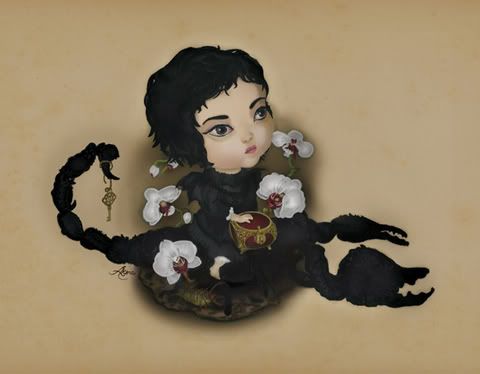
Lang Leav should have stuck with being an exhibiting artist and left poetry to the poets, and maybe, just maybe, I might just have appreciated her bobble-head inspired works, like this:

description
That stung! Just like reading her poems.

Or then again, maybe not. Sorry, not so sorry.

Friday, June 13, 2014

The Book of Questions by Pablo Neruda

Title: The Book of Questions
Author: Pablo Neruda
Original Publication Date: 1974
Pages: 96


You don’t want to answer me.
But the questions do not die.
-(Neruda, 1924)


The Book of Questions is a collection of 316 questions that compose the 74 poems. 316 questions which no rational answers exists, says the introductory part of my copy. No rational answers may exist for these questions, but the rational mind will strive beyond conventions to grasp its meanings. If you will ruminate on this 74 poems, one will find that some answers do exist, albeit spiritual and mercurial answers validated by allusive affinities.

Neruda’s recurring style, his use of nature, and things from nature are indispensable aspects of his, but the only correspondence one will find between the poems is that they are questions, for various thematic characteristics are at play here.

There are some poems one must simply take in visually and revel in the imagery they invoke discarding their literariness.

If all rivers are sweet
where does the sea get its salt?
(Poem V)

For whom do the pistils of the sun burn in the shadow of the eclipse?
How many bees are there in a day?
(Poem XXI)

Some are consummately surrealistic.

What happens to swallows who are late for school?
Is it true they scatter
transparent letters across the sky?
(Poem VII)

Others would seem to be derived from pure sadness.

Do tears yet spilled
wait in small lakes?

Or are they invisible rivers
that run towards sadness?
(Poem LX)

Some are allusions and undeniably metaphors for diurnal activities.

Why does agriculture laugh at the pale tears of the sky?
(Poem XXX)

Some unequivocally express Neruda’s political beliefs.

And to position sad Nixon
with his buttocks over the brazier?
Roasting him on low
with North American napalm?
(Poem XV)

What forced labor does Hitler do in hell?
Does he paint walls or cadavers? Does he sniff the fumes of the dead?
Do they feed him the ashes of so many burnt children?
Or, since his death, have they given him blood to drink from a funnel?
Or do they hammer into his mouth the pulled gold teeth?
(Poem LXX)


And a handful refers to his personal thoughts on the reception of his poetry by the posterity.

What will they say about my poetry who never touched my blood?
(Poem X)

Some too were infused with wit.

And why did cheese decide
to perform heroic deeds in France?
(Poem XX)


The book of questions may just have something for everyone.


Other work by Pablo Neruda:
Twenty Love Poems and a Song of Despair (3 Stars

This book forms part of my remarkably extensive reading list on Nobel Prize for Literature Laureates

Monday, June 9, 2014

Twenty Love Poems and a Song of Despair by Pablo Neruda

Title: Twenty Love Poems and a Song of Despair
Author: Pablo Neruda
Original Publication Date: 1924
Pages: 70

Neruda does not play with the intangible. He does not waste words with the abstract. One simply needs to read and take in the pure and stark versification of the sensualities of life, both in love and lust.

Neruda’s distinct style in poetry is easily distinguishable.

First, his work is intuitive of the austere beauty of nature and his Chilean roots. The verses are reflective of the uncompromising beauty of the environment that he has witnessed in his formative years. The poems allude to the vastness of the pines, the heart of summer, sweet blue hyacinths, still ponds, barren lands, and white bees.


“I will bring you happy flowers from the mountains, 
bluebells,
dark hazels, and rustic basket of kisses.”
(74, Poem XIV)

Second, Neruda also leads us to enjoy the sweetness existing in realm of the senses. He fearlessly incorporates love and lust in his verses.

“My somber heart searches for you, nevertheless,

And I love your joyful body, your slender and flowing voice.”
 (75, Poem XIX)

“Tonight I can write the saddest lines.
I loved her, and sometimes she loved me too.”
(77, Poem XX)

But to read and consume these two aspects of his poetry in a compartmentalized manner would be an affront to why Gabriel Garcia Marquez called Neruda “the greatest poet of the 20th century in any language."* Neruda combines the sensual experience of the individual with the beauty of the natural and the reader is treated to a union unlike any other.

“Body of a woman, white hills, white thighs

You look like a world, lying in surrender.
My rough peasant’s body digs in you
and makes the son leap from the depth of the earth.”
(3 Poem I)

“I go so far a to think that you own the universe.
I will bring you happy flowers from the mountains,
bluebells,
dark hazels, and rustic basket of kisses.
I want
to do with you what spring does with the cherry trees.”
(74, Poem XIV)


notes:
* The fragrance of guava: Conversations with Gabriel García Márquez.

I did not give a short introduction on Neruda reserving most of my comments later on for a review on his memoirs.

My copy is bilingual, a Spanish-English translation by W.S. Wermin, which definitely polished my rusting Spanish speaking skills.

The same copy is infused with Pablo Picasso’s works like this,
description

You get the idea that it seeks to perhaps contribute to the general them of the book, but I have no sound knowledge if this was sanctioned or approved by Neruda in its first translated printing in 1969, five years before he died, or whether the same pictures accompanied the first print in Chile in 1924, or if it appeared only in this copy published by Penguin Books.


This book forms part of my remarkably extensive reading list on Nobel Prize for Literature Laureates

Saturday, June 7, 2014

The Crescent Moon by Rabindranath Tagore

Title: The Crescent Moon
Author: Rabindranath Tagore
Original Publication Date: 1913
Pages: 124


Of the seemingly governing heavenly bodies that grace our diurnal lives, it is, in innumerable instances, the Moon that stands as the epitome of womanhood, and by necessary operation, motherhood. Father Sun and Mother Moon and Children Stars, so it would go. The raison d’etre for such association is conspicuous. The moonlight always seemed so intuitive, warm, subtle and welcoming, as warm as a mother’s embrace, as welcome as a mother’s love.

The crescent moon, which follows a new moon, would suggest new beginnings. But in the cyclic fabric of the Lunar phases, everything may, inevitably, stand for beginnings and endings.

This is what The Crescent Moon contains, poems and rhapsodies about motherhood and their children in varying degrees of this supreme bond. Verses talk about a baby’s heavenly birth, a child’s charming precociousness, a mother’s concern, and the inevitable bittersweet sadness over the emotional transition of a child growing up, the beginnings and endings of the mother and child relationship. This explores the beauty of the child’s world and the boundless nature of a mother’s love. These are the pervasive themes in this book.


“I wish I could travel by the road that crosses baby's mind, and out beyond all bounds;

Where messengers run errands for no cause between the kingdoms of kings of no history;

Where Reason makes kites of her laws and flies them, and Truth sets Fact free from its fetters.” (18)


The 4 star rating should suffice to validate that beyond Gitanjali, Tagore’s sublime touch and masterful grace is still present.

This is my most favored among the lot.


THE BEGINNING

"WHERE have I come from, where did you pick me up?" the baby asked its mother.

She answered half crying, half laughing, and clasping the baby to her breast,-- "You were hidden in my heart as its desire, my darling.

You were in the dolls of my childhood's games; and when with clay I made the image of my god every morning, I made and unmade you then.

You were enshrined with our household deity, in his worship I worshipped you.

In all my hopes and my loves, in my life, in the life of my mother you have lived.

In the lap of the deathless Spirit who rules our home you have been nursed for ages.

When in girlhood my heart was opening its petals, you hovered as a fragrance about it.

Your tender softness bloomed in my youthful limbs, like a glow in the sky before the sunrise.

Heaven's first darling, twin-born with the morning light, you have floated down the stream of the world's life, and at last you have stranded on my heart.

As I gaze on your face, mystery overwhelms me; you who belong to all have become mine.

“For fear of losing you I hold you tight to my breast. What magic has snared the world's treasure in these slender arms of mine?”


Other works by Rabindranath Tagore:
The Gardener (4 Stars)
Gitanjali (4 Stars)
Nationalism (3 Stars)

This book forms part of my remarkably extensive reading list on Nobel Prize for Literature Laureates

Thursday, May 29, 2014

Gitanjali by Rabindranath Tagore


Title:  Gitanjali
Author: Rabindranath Tagore
Original Publication Date:1910
Pages:90


'I read Rabindranath every day, to read one line of his is to forget all the troubles of the world.'

-Unnamed Bengali Doctor addressing W.B. Yeats, contained in the Introduction

Isn’t it just fitting that this masterpiece be introduced by a person no less than William Butler Yeats who is another Nobel Laureate? Tagore received the Nobel in 1913 and Yeats in 1923. It is ostensibly perceivable that Yeats managed to capture the focal points in his Introduction, so quoting parts of Yeats introduction and placing my heartfelt impressions, let me try doing justice to this book, however insufficient that may turn out to be.

Gitanjali is a collection of poems,  ruminations and rhapsodies, or more accurately Song Offerings, and when you do offer something, you offer it to a higher being, a divine existence of which belief is professed, and so, much of the verses are addressed to a Lord, God, and Master.

Yeats in introducing this work to William Rothenstein says:

“For all I know, so abundant and simple is this poetry, the new renaissance has been born in your country.”(7)

And this is true in both instances that I have read Tagore, just as it was in The Gardener, the poetry was actually simple but it communicates at so many levels owing to the depth that is carried by Tagore's ruminations.

“These verses will not lie in little well-printed books upon ladies' tables, who turn the pages with indolent hands that they may sigh over a life without meaning, which is yet all they can know of life, or be carried by students at the university to be laid aside when the work of life begins, but, as the generations pass, travellers will hum them on the highway and men rowing upon the rivers.”(8)

And more than a hundred years since its original publication, where in those hundred years we have witnessed, through history’s questioned objectivity, men doubt the ideals of their forefathers and see thier beloved posterities entirely discard what has been handed down, it is extraordinary to enjoy sometime like Gitanjali, which in all its completeness is certainly worthy to be read beyond its year if not entirely a timeless masterpiece on its own.

“I have carried the manuscript of these translations about with me for days, reading it in railway trains, or on the top of omnibuses and in restaurants, and I have often had to close it lest some stranger would see how much it moved me.”(9)

I too have carried Gitanjali over the days, over a span of daytrips, through the inevitable but longed-for ride home, through talks with friends, and ardent discussions with other students, I sometimes find myself, reading parts of this work, and you really do “forget all the troubles of the world.” But unlike Yeats, I did not hesitate to show the world how much it moved me. If words so masterfully chosen and phrases adroitly matched delivered a gamut of emotions, I welcomed it. If it made me smiled, I smiled, if it made me ponder, I ruminated. I wanted the world to see, I wanted to tell them, this is Gitanjali, and you should read it too.

“These lyrics— which are in the original, my Indians tell me, full of subtlety of rhythm, of untranslatable delicacies of colour, of metrical invention—display in their thought a world I have dreamed of all my live long.”(10)

And in the same vein, I am perpetually grateful and irretrievably wounded that my experience is defined by a translated medium. Now that is one hell of a dilemma. I could feel the “subtlety of rhythm, of untranslatable delicacies of colour, of metrical invention” which must be so richly contained in Bengali, just inches beyond my reach, but still gravely beyond my reach, unrelentingly clawing at my thoughts reading this.   But if there’s one thing that I’ve learned through Tagore, that is, to be thankful for what comes in life. And this is also what I appreciate in Tagore, he loves life, he loves the world, and for that he welcomes death itself in its entirety.

I leave you with a customary quotation.

“On the seashore of endless worlds children meet. The infinite sky is motionless overhead and the restless water is boisterous. On the seashore of endless worlds the children meet with shouts and dances.

They build their houses with sand and they play with empty shells. With withered leaves they weave their boats and smilingly float them on the vast deep. Children have their play on the seashore of worlds.

They know not how to swim, they know not how to cast nets. Pearl fishers dive for pearls, merchants sail in their ships, while children gather pebbles and scatter them again. They seek not for hidden treasures, they know not how to cast nets.

The sea surges up with laughter and pale gleams the smile of the sea beach. Death-dealing waves sing meaningless ballads to the children, even like a mother while rocking her baby's cradle. The sea plays with children, and pale gleams the smile of the sea beach.

On the seashore of endless worlds children meet. Tempest roams in the pathless sky, ships get wrecked in the trackless water, death is abroad and children play. On the seashore of endless worlds is the great meeting of children.”


Other works by Rabindranath Tagore:
The Gardener (4 Stars)
Nationalism (3 Stars)

This book forms part of my remarkably extensive reading list on Nobel Prize for Literature Awardees

A free ebook copy is legally downloadable here, along with a voluminous number of other works: Gutenberg

Saturday, May 24, 2014

The Gardener by Rabindranath Tagore

Title: The Gardener
Author: Rabindranath Tagore
Original Publication Date: 1913
Pages: 87


“It is a game of giving and withholding, revealing and screening
  again; some smiles and some little shyness, and some sweet useless struggles.
This love between you and me is simple as a song.

No mystery beyond the present; no striving for the impossible; no
  shadow behind the charm; no groping in the depth of the dark.
This love between you and me is simple as a song.

We do not stray out of all words into the ever silent; we do not
  raise our hands to the void for things beyond hope.
It is enough what we give and we get.
We have not crushed the joy to the utmost to wring from it the
  wine of pain.
This love between you and me is simple as a song.”

One of my favorite excerpts from this wonderful book. It is amazing to read Rabindranath Tagore, a Bengali polymath, a hundred and one years after he received his Nobel Prize for Literature, a hundred and one years after being the first non-European awardee of the Nobel. The Gardener is a book of poetry. In the beginning, a modest servant pleads to the queen to be her gardener. She asks the reason why. He answers, the simplicity of which carries a subtle unfathomable heartbreaking depth. But perhaps, the servant turned gardener was compelled, inescapably, by an unrequited impermissible love for the queen, the kind that makes you queasy and uncharacteristically giddy all around, for much of this book contains aphorism, euphemisms, and ruminations for love in its varying forms, shortcomings and eternal joys, or perhaps the Gardener wanted the queen to know the real beauty of life, as ponderings in life too are contained in it. Tagore's use of colloquial language is spiritual and mercurial. There is depth in his rich use of imagery and allegories and one can read this in varying degrees but it is strange that at the same time it is straightforward in its delivery that it taxes credulity knowing this has been written a century before. And I think, it too is wonderful how he ended this work. Strange and beautiful.

"Who are you, reader, reading my poems an hundred years hence?
I cannot send you one single flower from this wealth of the
  spring, one single streak of gold from yonder clouds.
Open your doors and look abroad.”

“From your blossoming garden gather fragrant memories of the
  vanished flowers of an hundred years before.
In the joy of your heart may you feel the living joy that sang
  one spring morning, sending its glad voice across an hundred
  years."


This book forms part of my remarkably extensive reading list on Nobel Prize for Literature Awardees