Showing posts with label murakami. Show all posts

Monday, July 7, 2014

South of the Border, West of the Sun by Haruki Murakami

Title: South of the Border, West of the Sun
Author: Haruki Murakami
Original Publication Date: 1992
Pages: 190
Genres: Fiction, Magical Realism, Contemporary Fiction


In denying a foothold to any portentous propensity of being needlessly repetitive, but more so in the interest of brevity, I opted to start forthcoming reviews, of which there seem to be many as this Murakami fever I have uncannily contracted has sternly refused abatement, with the Murakami Bingo! Murakami may have a definitive 'murakami' style but it still operates within a framework with formulaic themes and recurring plot devices.

description

So here we go!
Mysterious Woman? Operative truth!
Unexpected Phone Call? Check!
Old Jazz Record? Check!
Urban Ennui? Check!
Running? Check!
Weird Sex? Check!

So the Murakami in [South of the Border, West of the Sun is more of the Murakami of Norwegian Wood than his surrealist magical-realism books like Kafka on the Shore and Dance Dance Dance. It is however the usual Murakami of losing and longing, of searching and failing. This piece puts us in Hajime's shoes from his childhood to his middle years. To put it bluntly, this is a story of mid-life crises and marital infidelities. Murakami has written a real universal character that we occasionally find ourselves communing with in more ways than we personally acknowledge. We all go out in the world, frantically searching for something, something we only feel in vague stirrings, and sometimes, in our definite inevitable folly, something we don't know of. Whether we seek something that exist or something we have subconsciously created out of a desperate need to define ourselves has never been the question, for the search itself has always been the answer, hasn't it? That is why, strangely enough, even though I have yet to attain numerically sound midlife crises, get married and have children, I found myself sympathizing if not empathizing with Hajime.

“All good books are alike in that they are truer than if they had really happened and after you are finished reading one you will feel that all that happened to you and afterwards it all belongs to you: the good and the bad, the ecstasy, the remorse and sorrow, the people and the places and how the weather was. If you can get so that you can give that to people, then you are a writer.” (Ernest Hemingway)

The good and the bad, the ecstasy, the remorse and sorrow, the people and the places and how the weather was,  all belonged to me, all became mine. Thank you, Murakami, for yet another wonderful sojourn!


I have reviewed other books by Haruki Murakami
Dance Dance Dance (3 Stars)
Kafka on the Shore (4 Stars)
Norwegian Wood (2 Stars)
The Wind-Up Bird Chronicle(2 Stars)

This review, along with my other reviews, has been cross-posted at imbookedindefinitely

Wednesday, July 2, 2014

Dance Dance Dance (The Rat Series #4) by Haruki Murakami

Title: Dance Dance Dance (The Rat Series #4)
Author: Haruki Murakami
Original Publication Date: 1988
Pages: 323
Genre/s: Fiction, Magical Realism


“Dance," said the Sheep Man. "Yougottadance. Aslongasthemusicplays. Yougotta dance. Don'teventhinkwhy. Starttothink, onyourfeet, yourfeetstop, wegetstuck. Wegetstuck, you'restuck. Sodon'tpayanymind, nomatterhowdumb. Yougottakeepthestep. Yougottalimberup. Yougottaloosenwhat-youbolteddown. Yougottauseallyougot. Weknowyou're tired, tiredandscared. Happenstoeveryone, okay? Justdon'tletyourfeetstop.” (179)

description
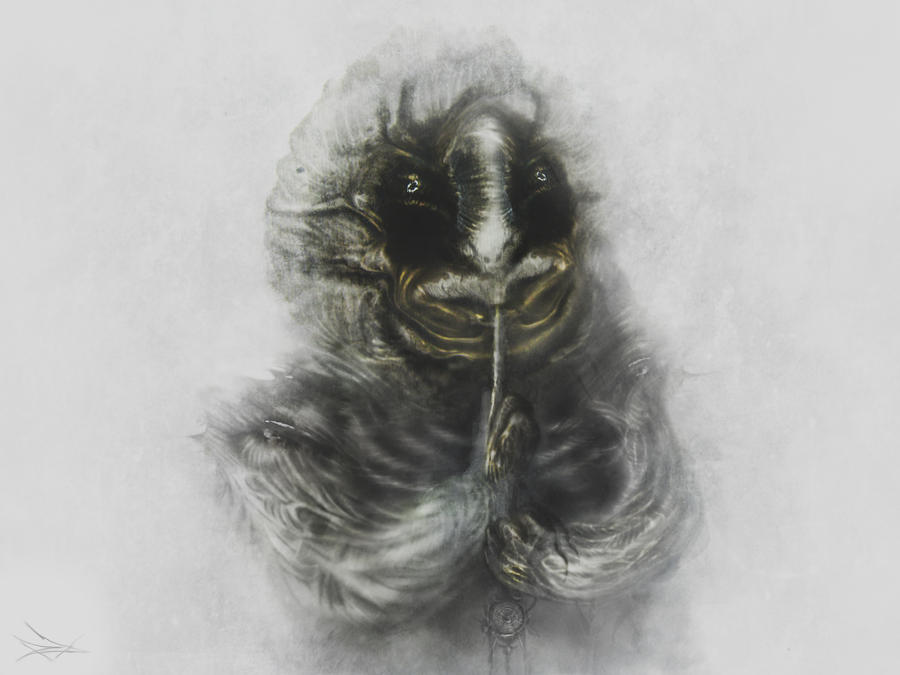
A Rendition of The Sheep Man

What did you expect? A normal talking conventional character? Of course not. There’s nothing like that here, or anywhere in Murakami’s work it would seem.

“I often dream about the Dolphin Hotel."(6)

Dance Dance Dance follows a nameless narrator haunted by recurring dreams of a hotel, The Dolphin Hotel, he was brought to by a high-end call girl. Whether it is the hotel or the call girl that keeps bringing him back, he cannot recall, nor seem to totally forget. He decided, after a life of indecisiveness, to finally return to the Hotel, only to find the place to have been lost to a capitalist investment of the same nature and the same name. He struggles to establish connections in the world, he wanted, as he was advised to ‘dance’, and in these mishaps, to look for a lost love, he was accompanied by stoic-faced laconic-responsed thirteen-year old girl gifted with limited clairvoyance and meets an old high-school acquaintance.

I was almost irretrievably tempted to write this review in the Sheep Man’s language above, one without the proper spaces between words, but after trying  it on the first few sentences, I found that it is even harder to control actions that border reflex and the subconscious, like that of tapping the space bar.

“You're probably right. As you say, I've lost and I'm lost and I'm confused. I'm not anchored to anything.”(87)

The idea that the unnamed narrator is drawn to the Dolphin Hotel made me shiver first, for an uncanny reason I quickly associated this with that of The Shining’s Outlook Hotel. The terror and fear which characterized my reading experience with it is exchanged by curiosity and interest in this piece however. Stripping this books plethora of surrealistic aspects, we are left with a bare handed tale of a lost man who has nothing but lost connections. And that is not mere tautology for Murakami’s work’s always concern an individual who is lost or has lost something leading us to narratives which are always unique, lyrical, and impeccably fluid. These narratives, which are always open to unfathomable elucidations of the metaphors and allusions they offer don’t always provide a closure, in fact they hardly ever do, don’t they?

"The human mind dwells deep in darkness. Only the person himself knows the real reason, and maybe not even then." (359)

The impeccable lyrical prose would, however, seem to me to be, mere icing on the cake. What compelled me to read another Murakami within a week of finishing Kafka on the Shore was how tangible, how alive, he has brought his characters to life in surrealistic world. They are alive in their search for meanings, in their struggle to make human connections in an unforgiving world, they were the struggles of the everyday individual, they were mine too.

Murakami’s style is deftly his own. Me may be in a fickle love-hate relationship considering your other works, but just as you have written, there are certain individuals who exclusively bring you to euphoric places, and in a literary perspective you do fit the bill as one of those authors. Through your words, I am transported into this unique wonderful surreal world and still remain, human, very human indeed.

And added bonus is that whenever I finish your work, I get to play this bingo! Now, where does Dance Dance Dance, figure into this.

 description


I have reviewed other books by Haruki Murakami
Kafka on the Shore (4 Stars)
Norwegian Wood (2 Stars)
The Wind-Up Bird Chronicle(2 Stars)

This review, along with my other reviews, has been cross-posted at imbookedindefinitely

Kafka on the Shore by Haruki Murakami

Title: Kafka on the Shore
Author: Haruki Murakami
Original Publication Date: 467
Pages: 2002
Genres: Fiction, Magical Realism


Crazy.

Legit crazy.

But compelling riveting crazy.

I guess it is only with Murakami that the reader will experience a philosophically charge Hegel quoting prostitute, a spectral discount-giving pimp, pragmatic talking cats, a retelling of the oedipal Greek tragedy through a schizophrenic reincarnated personality, an unfathomable leech-filled-rain commanding simpleton, all bizarrely intended to constitute an introspective metaphorically peppered coming of age story, keeping you at a sublime reverie the entire time, if not devouring its pages, the voracity of which the world has never seen.

Everything I liked about this books concerns the style.

He doesn't provide much detail but gives you irrefragable operative truths in his written work, the rational closure-seeking mind may not find a welcome place here.

The prose is lyrical and the transitions are fluid. But for all its beauty and fluidity, the reader does not know where he is being drawn, you have faint gleamings of the story but that is all you are afforded.

The other aspect I loved was the narration. The omniscient narrator suddenly changes tone by directly addressing the reader.

"...you say, i forgive you. And audibly, the frozen part of your heart crumbles (398)"

A technique used by Italo Calvino in If on a winter's night a traveler and masterfully by Saramago in some of his prose. In both instances, the effect was that the reader was made part of the narrative, it was as if it removed objective barriers between that of the reader and the story. The same riveting interactive effect made me care more about Kafka, it made me connect more with the story.

Any reservation I have towards this book concerns the weird crazy sexual encounters Murakami wrote.

Crazy.

Legit crazy.

But compelling riveting crazy.


I have reviewed other books by Haruki Murakami
Dance Dance Dance (3 Stars)
Norwegian Wood (2 Stars)
The Wind-Up Bird Chronicle(2 Stars)

Thursday, September 5, 2013

Norwegian Wood by Haruki Murakami

Somehow a very predictable plot. When I say this what I mean is that Norwegian Wood is discernably portraying Japanese culture, impeccably. I'm struggling to grasp the novel theme inside this work that makes Murakami so celebrated, and distinct as claimed – a struggle in vain (Perhaps there is none, and my inherent failure to connect with Murukami's elegiac writing is barred by my preferences. One thing that have always remained in earnest interest is that misery does love company and perhaps a reason why melacholic writings proliferate under this arrangement. A depressed book for a depressed world). Even Murakami is baffled at the popularity of this work. Until then I'm inclined to agree that Murukami is really not worth a Nobel after all.

Now, off to his other works which I hear treat suicides more thoughtfully, or perhaps nothing else beats a talking cat.

The Wind-Up Bird Chronicle by Haruki Murakami

Redeeming. The innumerable opinions and notes on this work do not give justice to the masterpiece that it is. Now this is distinctively Murukami, epic, superb, astounding, is what I would have said, but alas, as clichés are, the book is boring.

The surreality the readers love about this book (and of Murakami) is a trap. The story carries an atmosphere where anything can happen, which antithetically results in nothing happening. That is only the tip of the iceberg though (a cliché of which I'd say, Murakami did nothing to avoid employing). What bugs (cliché) me however is that Murakami knowingly wrote a 600-paged novel tackling an epic story only to leave out things unexplained, unsubstantiated and unanswered.

Surreal. Defined by Merriam-Webster as:

1. marked by the intense irrational reality of a dream; also: unbelievable, fantastic

Under the definition Murakami hits the spot (cliché). The book was irrational and dream like. In some instances (cliché) the prose is simply too verbose it was practically begging for brevity to make some sense, but not even the kind that would give you a minuscule fragmented understanding of the story. Not to mention it was repetitious (perhaps the fault lies in the translation of the material? perhaps this too is a compliment).

Someone on this site said that the book is a flawed masterpiece. I interject, out of sheer audacity more than the cheated feeling of reading a 600-paged novel absolutely arriving nowhere, that technically a masterpiece is something done with extraordinary skill and a flaw is an imperfection or weakness. This is what is now either a masterpiece or a flawed work of art. Either way, I give up on Murakami.

To his credit I enjoyed a subplot (on the WWII) better than anything contained in the book. But alas, even that was lost and forgotten.