Showing posts with label Romance. Show all posts

Monday, July 7, 2014

Love and Misadventure by Lang Leav

Title: Love and Misadventure
Author: Lang Leav
Original Publication Date: April 26, 2013
Pages: 176
Genres: Poetry, Romance


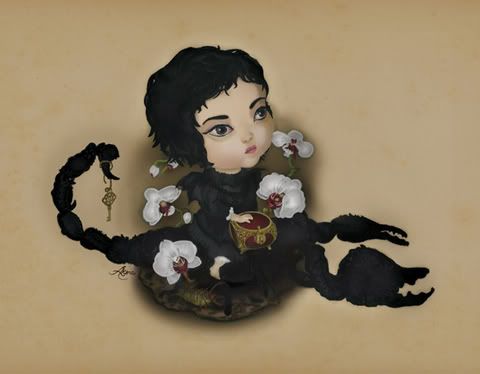
Lang Leav should have stuck with being an exhibiting artist and left poetry to the poets, and maybe, just maybe, I might just have appreciated her bobble-head inspired works, like this:

description
That stung! Just like reading her poems.

Or then again, maybe not. Sorry, not so sorry.

Friday, June 13, 2014

Attachments by Rainbow Rowell

Title: Attachments
Author: Rainbow Rowell
Original Publication Date: April 14, 2011
Pages: 336

A sweet and funny read with all the awkwardness of the situation beaming at the reader.

Rowell provides witty characters with just the right amount of quirkiness enough to make the reader identify, if not love them. The pop culture references, especially the sci-fi ones are delightful, and doesn't seem to be forced and out of context.

The setting and the character dilemmas of the story would provide a good rapport especially to late-bloomers.

Thursday, May 29, 2014

Every Day by David Levithan


Author: Every Day
Title: David Levithan
Original Publicaiton Date: 2012
Pages: 322


It would seem that David Levithan has no love for the traditional linear narrative form of story writing. The Lover's Dictionary (1 Star) is in, as its namesake suggests, dictionary entries. Every Day too is not of the traditional linear form. It has no beginnings, and it knows no ends. It began where it ended, and it ends where it began. Searching for closure here would be an act in vain.

Every Day tells us the existence of an entity which inhabits a body for just one day. For one day it gets to live in that body. On the next day, it is randomly transferred to yet another body. The concept is terrifying and hauntingly beautiful. But David Levithan chose the dilemma of loving in that momentary living as the focal point of the story. In so doing he presents us various lives of what can be readily seen as stereotypical teenagers like metalheads, depressed individuals, jocks, cheerleaders, nerds, and teens struggling with their identities.

I like the two messages I picked up in this book. The form without end and beginning gives credence to the leitmotif that we should live in the present just as the entity does, living day by day in different bodies. The second that love is universal, that it is not solely anchored on our physical facet but on the person as a whole, that it is not just between man and woman. I think this book made a lot more sense because Levithan did not endeavor to elaborate on the mysterious aspects but instead played on the emotions involved, I like that he did not clear up the mysteries. You may feel cheated, ending up where he started, but Levithan played that real good.

Friday, May 9, 2014

The Fault in Our Stars by John Green


Title: The Fault in Our Stars
Author: John Green
Publisher: Dutton Books
Original Publication Date: January 10, 2012
Pages: 318


This is a story of boy meets girl. 

The boy, Augustus Waters of Indianapolis, walked with a hobbling gait, a crooked and triumphant gait. This gait perhaps was a metaphor for particular triumph over osteosarcoma a year and a half ago that will lead us to a belief fraught with existential crises. The boy loved metaphors. A passion that perhaps sets this story in motion, for the girl might have been very a well a metaphor for a ghost. The girl, Hazel Grace Lancaster, loved only two things. The first, the fact that she has stayed true to the precarious belief that once she leaves this world, she will not have caused a scar; the second, the novel An Imperial Affliction and how she unceasingly yearns for a plausible denouement to its story. She did not know she will love a third time. Augustus meets Hazel in the heart of Jesus, cradling a cancer-support group peppered with stories of lost balls, encumbered by wars pre-destined to be lost, and haunted by lists populated by those who must be remembered as commanded by the ratio, 14:1.  He knew immediately that she’s his forever.

This is a story of boy meets girl. But you should know up front, this is not a love story.*

It’s not 'just another' love story.

I have not read other fictional novels containing cancer, or ones whose characters are fighting cancer, except for those medical journals and publications I happen to randomly come across once in a while, which of course cannot be compared in its aspects. So I do not have any point of comparison whether John Green aspired and achieved differently what he sought to when he wrote The Fault in Our Stars. What I have read however is his three other books, and perhaps I have substantial grounding to compare it.

John Green's stories are formulaic. They follow an identical framework, one which John Green's fidelity in rendering his books under such distinguishable yet ubiquitous rubric is, arguably, second to none. Let me say now that The Fault in Our Stars has been shaped under the same rubric. It is, essentially, no different from his three other books, only now instead of depression, teen angst and dubious teenage know-it-all rebellion, we have cancer as the mechanism that sets this story in motion.

This was a tragedy fraught with an existential crisis. Why you ask? It's simple. I have believed that for tragedies to have those heart wrenching and tear jerkers, the characters have to slowly, or all at once, identify and connect with the reader. This is not saying that empathy is no less of a medium in such instances, but, as I have felt in Green's earlier works, it is hard to identify with his characters.

It is hard because they seemed to be unreal, and even raising the characters to a pedestal, accentuating them as heroic models seemed to have failed for me. I'm not saying they are unreal in the sense that the pain and suffering that Green wrote in his characters are unreal (that is the part that actually successfully came across to me). What seemed unreal to me is that, aside from the frivolous aspect of these teenagers randomly spouting words like existential, hamartia, and resonances in everyday conversation, for basketball free throws and fleeting shadows which just seemed a tad unrealistic, it was that they suffered from immanent character inconsistencies.

It is curious to me why a person bent on leaving the least mark and scars on this world would readily go out and commit on leaving another scar. Or that a person detesting leaving legacies would seem to act in way that is characterized by nothing but leaving one (but then again this was the actual point of the book, wasn't it?). Or even of the fact that a person who lost a leg to cancer, even if declared free from it for a year and a half, would not engage in regular check ups only to be struck down with a massive recurrence. I'm not knowledgeable on this, but it seems stupid considering the vicious stories of virility and incomparable propensity of cancer cells to relapse (the cancer in this instance was one of those instances that it was relegated as a mere plot device). Perhaps too much love of metaphors makes one forget of the real things that matter.

Reading this was unique. I somehow visualized it as having composed of two parts. The romantic YA part and the part of story tackling cancer. The foregoing discussion has pertained, not strictly but majorly to the YA parts, which I rated 2.5 Stars. The parts which 'really' talked about cancer, I gave another 2.5 stars. I made it this way because I too felt that Green managed to capture a fraction of the truth on cancer and its derivatives, on teens fighting it.

For example, this statement is no stranger to me:

“Any attempts to feign normal social interactions were just depressing because it was so glaringly obvious that everyone I spoke to for the rest of my life would feel awkward and self-conscious around me, except maybe kids like Jackie who just didn't know any better.”

In its actuality, this rating is a five out of 10 but I am not stingy enough not to give that real five-star rating as it has some considerable leg to stand on. If I were a teen and was rating this, I would have felt five would have been an understatement. This proposition stands on a two-fold premise.

Green's quotability is one. I may not have been ineffably impressed with his prose, but he sure wrote a book peppered with statements and phrases one could unceasingly quote. It occurs to me that there are many ways to romanticize this work, this is one. Perhaps this too is the reason I've been seeing an innumerable number of Facebook posts that previously I did not know originated from this book.

This for example fully delivers.

"I fell in love the way you fall asleep: slowly, and then all at once."

Or this hidden gem here.

"....it occurred to me that the voracious ambition of humans is never sated by dreams coming true, because there is always the thought that everything might be done better and again."

But the real strength of this book lies in its audacity to compel, or endear people to read it, which in turn has led to an immeasurable number of audience. From the individuals whom I've considered as intellectual forces to be reckoned within Goodreads and in personal circles, to those who are much like my sister where young teen giddy love is alive, not only have they found the time to read this book, they even took time to write reviews bearing their hearts out. Considering this in a global scale, I do not doubt that a lot of people came to appreciate reading, or perhaps had their first real reading experience with this book. That is something great. John Green made that happen. This book made it happen. Of course, this should, as it is, only be the footstep of what is to be a marvelous development in reading for individuals.

The general message is actually good. Let not sickness define you.

Withal, I further learned to never again underestimate the power of peer pressure, or one's sister's coercive and threatening gesture to force you to read something.

P.S.
I hated Augustus' cigarette metaphor and strongly stand that it was pointless and dangerously equivocal of his intentions. I recognize that this is a desperate act for any semblance of control in answer to the recalcitrant cancer, but still, it failed for me.


*opening italicized lines lifted from 500 Days of Summer :)

Thursday, April 24, 2014

Eleanor & Park by Rainbow Rowell

Title: Eleanor & Park
Author: Rainbow Rowell
Publisher: Orion
Original Publication Date: April 12, 2012
Pages: 325

Sad stories make for good books. The better statement would be that sad stories are treasure troves for writers to make books about.

At least this statement holds true for Eleanor and Park as it does for most YA Romance books, in the likes of John Green's, Daniel Handler's or the other various books in this genre. I read this book after reading a number of Saramago's books which are laden with sentences paragraphs long, Eleanor & Park, was, as one would say it, a welcome break. As it would turn out, the reading itself was not however a welcoming experience.

STORY
There was a sense of familiarity with this book, which is sadly, not of the good kind you experience reading coveted stories of childhood like that of Atticus Finch, or of even of the fictional world of Le Guin's where deliverance from nostalgia is an unwelcomed visitor. No. Unlike the desire to embrace and revel in this book's familiarity, one tends to get tired and exhausted. The first romance between two teens, both with familial problems and issues of their own is lifted straight out of cliche and hackneyed themes. I've read it a number of times and in every case, the essential struggle, if not the sole aim, is to find something new the book, the story, the characters, the author is offering. Sadly, the book was not able to discharge this burden.

HISTORICAL SETTING
I'm not a pundit but it doesn't need one to see that the story development and the social and factual setting of this story, in 1986, is in conflict and inconsistent. Discrimination and preferential treatment in those days were not as subtle as it is of this age. I simply felt that there was a lot of potential in Park as this half Korean kid whose mother was directly taken from Korea right after the American perversion, sorry, assertion of capitalistic designs disguised through its affirmation of its unilaterally defined democratic principles in the Vietnam War. The point is, I think Park would have been more interesting if he wasn't defined by the traditional sibling rivalry which to some extent Rowell did endeavor on, only she did not expound on it.

NARRATIVE FORMAT
As standard YA Romance novels go, the book falls under the stream of consciousness thought, albeit the narrative is directed by the alternating POVs of the male and female protagonist. The narrative is interlaced with conversations that are direct and crisp, which makes this book really an easy read and hastily contributes to that well neglected reading challenge. The problem with the alternating POVs is that sometimes it borders repetitiveness, though it may also stand for recognition of the emphasis and weight of the moment in the book.

Sunday, March 30, 2014

The History of Love by Nicole Krauss

Title: The History of Love
Author: Nicole Krauss
Publisher: W.W. Norton & Company
Original Publication Date: April 1, 2005
Pages: 260

This is now one of the greatest novels I have read.

I would have settled with that, except that the History of Love is just too pleasing, that my terseness was rather forcibly rooted out by the book. I seldom review (if one could call them that) books that I rate with 4 to 5 stars.

I remember reading once, where I did I have long forgotten, a witty reason that justifies speechlessness. I have once tried to verify this and failed to substantiate the claim (perhaps I looked at the wrong place), though I have held on to it because of its appeal and the propensity for people to believe it, much like common myths we choose to believe in (like how taking vitamin c supposedly cures common colds).

I'm telling you this because I was literary left speechless, reeling, contemplating and pondering numerous times in the book. The fact that I am writing to you now tells you of the triumph this book has precipitated upon my centuries evolved amigdula. What it doesn't tell you however is how it won that battle.

Everything about this book is pleasing from the typesetting, the form, the plot, the characters, the message.

I mean how could have Krauss presented such depressing lives in a riveting manner? She has presented the book in such a way that I have felt that there was a light at the end of the tunnel. And that kept me going.

I think the message that the book wanted to impart, or what at least it was able to impart to me in this convoluted setting is that moving on and letting go cannot be done (or is next to impossible) in solitude, that we can only move on with the help of somebody else, whether that be another love interest, a friend, or most especially, a family member. It was a simple message carried out in a convoluted manner perhaps the aspect that could have founded of diminished the beauty of this book.

Wednesday, October 2, 2013

On Love by Alain de Botton

Title: On Love
Author: Alain de Botton
Publisher: Grove Press
Original Publication Date: 1993
Pages: 194

I have been having different slices of the same loaf. And I plan to continue on finishing the platter until kingdom come. After reading Fromm's Art of Loving, Alain de Botton's On Love was consequently partaken of.

At the outset, Art of Loving must be considered as a league of its own. The theorizing Fromm achieved was incomparable in that love, like any other concept in the social sciences, could be easily demystified, unraveled and explained by the use of inquiry and reason; even though what Fromm wrote in the intro that every endeavor committed to such pursuit is bound to end in failure still held true until the bitter end of his book. An aspect which De Botton's work did not tackle (and conclude with) in a  significantly different matter.

If Fromm wrote about the origins of love and how love can be successfully pursued as an art in itself in a very scholarly manner, De Botton on the other hand wrote on the inception of love and the processes it goes through, albeit ending in an unideal and rather depressing manner. For all it's worth however, On love manages to encapsulate the reader for the very personal, realistic and relatable (most especially) manner De Botton has chosen to write this book.

The book is divided in essays on particular issues connected through out a developing relationship. We are treated to numbered paragraphs under these essays. The riveting aspect of this book however lies in the manner De Botton was so successful in enlacing the theoretical aspects to the fictional aspect that objectified and so perfectly represented his theories and arguments. De Botton not only theorize love well, he presented the readers with something they can objectively relate to through Chloe's fictional love story, and in doing so, managed to humanize what was conceived in abstract. More than that, it managed to establish a connection with the reader, by a common thread of experience in the story. De Botton did not only theorize actions of love like putting meaning where there is none, holding hands, happiness, betrayal and fear of loving again and of loving again, he wrote about it through Chloe. De Botton is one great love story writer that most YA Romance novelist will ever dream of.

The sentences were beautifully written, incomparably so. I remember reading Hemingway and having the same reaction. De Botton simply writes beautifully.

If there were any limitations to this book, we have to concede that it is written in a certain perspective, a man's perspective, which sometimes arguably is guilty of permeating the objectiveness of the arguments.

The Lover's Dictionary by David Levithan

Title: The Lover's Dictionary
Author: David Levithan
Publisher: Farrar, Straus and Giroux 
Original Publication Date: 2011
Pages: 211


Belated 
adjective 
1 : delayed beyond the usual time
2 : existing or appearing past the normal or proper time

Actually took me up until letter B to realize that I was bored reading it.

Drop/Dropped
transitive verb
1 : to let fall : cause to fall
2 a : give up 2, abandon

I am putting this into my DNF shelf. I cannot simply force myself to finish this! I think my upcoming finals schedule is taxing enough. Also I forcibly placed this so that 'did not finish' could be inserted, just like how the book felt, a lot of the entries were rather conventional, if not forced. No fluidity.

Continuance
noun
1 : continuation
2 : the extent of continuing : duration
3 : the quality of enduring : permanence

So I will be enduring this, because I know it takes a lot of trees to produce copies of this book. it will be a waste and shame to the trees to simply stop at letter B.

Tree
noun
1 a : a woody perennial plant having a single usually elongate main stem generally with few or no branches on its lower part
b : a shrub or herb of arborescent form

Wasted paper. Wasted trees. The format aimed to be novel and fresh and exciting. I'm telling you now it was nothing like that but large chunks of wasted spaces. In contrast to Nicole Krauss' History of Love and Jonathan Foer's Extremely Loud and Incredibly Close which masterfully employed this minimalist aspect in type-setting, I see nothing but fragmented struggling minimal entries in paper.

Hodgepodge
noun
: a heterogeneous mixture : jumble

The dictionary entry styles barely made any sense. Interjected themes, issues and ideas where they would randomly fit through the words. At the risk of being redundant, there was no fluidity.

Honesty
noun
1 obsolete : chastity
2 a : fairness and straightforwardness of conduct
b : adherence to the facts : sincerity

I confess I only read this because I failed to find a copy of Raymond Carvers' book What We Talk About When We Talk About Love.
I also confess, I never got past B. Sorry trees.

The Art of Loving by Erich Fromm

Title: The Art of Loving
Author: Erich Seligmann Fromm
Publisher: Harper and Brothers
Original Publication Date: 1956
Pages: 184

There's a lot of grain of truth in this theorizing and objectification of love that Erich Fromm successfully wrote. Let me quote with liberality such instances more so for the inherent beauty and magnificence of such statements.

One page xix

"It (book) wants to convince the reader that all his attempts at love are bound to fail; unless he tries most actively develop his total personality so as to achieve a productive orientation."

On page 22

"Love is an activity, not a passive effect; it is a 'standing in' not a 'falling for.' In the most general way the active character of love can be described by stating that love is primarily giving, not receiving."

On page 56

"To love somebody is not just a strong feeling — it is a decision, it is a judgement, it is a promise. If love were only a feeling, there would be no promise to base the promise to love each other forever. A feeling may comes as it may go. How can I judge that it will stay forever, when my act does not involve judgement and decision?"

On page 71

"Most people believe that love is constituted by the object not by the faculty. Because one does not see that love is an activity, a power of the soul, one believes that all that is necessary to find is the right object - and that everything goes by itself afterward. This attitude can be compared to a man who wants to paint but who, instead of learning the art, claims that he has just to wait for the right object and that he will paint beautifully when he finds it. If I truly love one person I love all persons, I love the world, I love life. If I can say to someone 'I love you,' I must be able to say, 'I love in you everybody, I love through you the world, I love in you also myself."

From a scholar and an academician's perspective, Art of Loving is highly reminiscent and indicative of the great scholar Fromm is. His arguments are well thought out and psychologically anchored. The conclusions are convincingly rationalized. My propensity to disagree however trickles in regarding certain points in his arguments.

Fromm situates fatherly love as love that is conditional in contrast to motherly love as unconditional. This condition, Fromm writes, depends on the child's capacity to please, satisfy and fulfill every fatherly expectation, requirement and demand. Now before anything else, the strength of this forthcoming argument is not anchored on personal disposition (for I am neither a father nor a husband yet) nor is it on a personal father-son relationship but on the patent criticism on Freud's study —that much of adult psychological development is founded on the child's experience (because it perpetuates that development is not progress and change but accumulation of the same static component). Now for you Fathers out there, is Fatherly love truly conditional? Does it really depend upon any fulfillment of a condition? Isn't it a bit partial, bordering sexism for fatherly love to be labeled as conditional? This is pivotal since Fromm forwards the argument that conditional fatherly love is the significant half component for the development of a mature being capable of truly loving. Cannot fatherly love be demanding, hard-driving, expectant and directing while at the same time be unconditional? Because in contrast to what Fromm writes, that the failure to transcend the conditional fatherly love results to one extreme end of the stick, the incomplete and incapable-of-loving person, perhaps such incapability have resulted from such conditional fatherly love in a very fundamental manner. Fromm's proposition of this kind of a fatherly love however carries something more portentous because as much as reality has put it, the general rule is non-fulfillment of such 'condition' and the fulfillment being the exception which necessarily forwards the conclusion that most individuals are incapable of loving.

The social milieu (having been published at 1956) at the time of the writing of this book is gleamed from the very words and arguments Fromm has employed. Take for example Fromm's argument on homosexuality, capitalism, and on criticism on Freud.

What surprised me however is Fromm's repeated employment of biblical passages and resources. In hindsight this should have come with no surprise at all as no better book talks (categorically and objectively) about love than the Bible, and this is true whether one reads it as a religious keystone or as a plain literary work.

Basically one of the theses of this book is that an individual has to be a complete individual by himself/herself. And I have always believed this to be true and found that acclaimed romantic statement 'you complete me!' to be a grossly incorrect statement. Fromm hits that mark masterfully.

Considering it all, Art of Loving is one enlightening work, something I'd never fail to recommend.

Monday, September 16, 2013

Looking for Alaska by John Green

Title: Looking For Alaska
Author: John Green
Publisher: Dutton Children's Books
Original Publication Date: 2005
Pages: 231

Here's the second book borne out of having been lost in a labyrinth that is Tolstoy (it is true that YA are easy reads, with respect to Looking for Alaska though, that is an understatement).

John Green's first book that I have first read, which interestingly, did not leave any hint of novelty. The reason is conspicuous enough. The plot is conventional and prevalent (predictable too). Who hasn't read, or heard of, of teenagers who know everything, of people who believe they stand at the top of the world only to be confronted by something beyond comprehension? Relegating the plot, perhaps the characters echo of redemption. I am again to be disheartened. The characters were the embodiment of stereotypes. Miles (stereotypical nerd) who leaves for boarding school only to search for his "Great Perhaps". What is surprising however is that Miles forgets this Great Perhaps of his only to reemerge in the last parts. One can hardly argue that his stay was his Great Perhaps, as the stereotypical nerd, he gets pushed and nicknamed Pudge, (where's any hint of a Great Perhaps?) with no attempt ror what so ever of shaking off occurred, in the contrary, Miles subdued himself to it, he pays for Colonel's cigarettes, and is of course forever chided by Alaska. Colonel (stereotype of a cool friend who strives because of a definitive family background). Alaska as the stereotype of the hot and smart girl who I guess Green envisioned to be near perfect in light of his feminism (who doesn't ever go beyond the pseudo-feminist bickering), a roomful of books and precal tutorials. So everybody likes her, but hell, you can't have her because once you thought so she'll start spouting that she's oh so loyal, right after making out with her.

Miles lost any redemption towards his Great Escape, something the author conventionally concludes through their predicament of "looking for Alaska". And if to add insult to injury, they never really did find Alaska, emphatically that is, did they?

The appeal is easy to see. The character's are in a school, no less of a boarding school, and yet they have access to booze, sex, and smoke. They can carry out any prank with little injury. So I guess Green cast his characters in a mold embossed with intelligence, love for learning and books not only to offset, but to some extent justify, what his characters do. Who would, from the young (who want to experience such), the YA (who are experiencing such), and the young once (who have experienced such), not get caught up in such a subjectively pleasing read?

So yeah, we give in to the occasional emotional torrent to which the work's success must have been anchored. We give in to the dreaded  effects of bullying, to the alienation, to the incomparable feeling of first love or lust, whether it be real or not, and to lost love, to chasing ghosts. We give in  to the pursuit of redemption, of Looking for Alaska through pulling the best imaginable prank ever in Culvert history. After all there is something somewhere to which we can relate to what Green has written, however minuscule or insubstantial that is.

I guess, if I were a teenager, I would have given it a 4 or even a 5. I admit I liked Mile's devotion to last words (got me curious to a great extent I'll be picking up a book on this), but somehow, the prank they pulled off was seemingly anti-climatic. I expected something more. Or then again, I am totally in the wrong for every word in this review, after all, it is American culture Green is writing into.

addendum
In an attempt dictated by convenience and compelled by the material, I have somehow visualized this review.

not viewable, here's the <a href="http://imageshack.us/photo/my-images/856/40020854.jpg"> link </a>
**i dread repeating words, which in this case is not only fitting but inevitable  in lieu of the indistinctness of the plot.

Thursday, September 5, 2013

Norwegian Wood by Haruki Murakami

Somehow a very predictable plot. When I say this what I mean is that Norwegian Wood is discernably portraying Japanese culture, impeccably. I'm struggling to grasp the novel theme inside this work that makes Murakami so celebrated, and distinct as claimed – a struggle in vain (Perhaps there is none, and my inherent failure to connect with Murukami's elegiac writing is barred by my preferences. One thing that have always remained in earnest interest is that misery does love company and perhaps a reason why melacholic writings proliferate under this arrangement. A depressed book for a depressed world). Even Murakami is baffled at the popularity of this work. Until then I'm inclined to agree that Murukami is really not worth a Nobel after all.

Now, off to his other works which I hear treat suicides more thoughtfully, or perhaps nothing else beats a talking cat.

Tuesday, September 3, 2013

This is How You Lose Her by Junot Diaz


I get the fact that Junot Diaz is a pioneering author when it comes to writing the experience of Dominican immigrants approximating the American dream. I also get that the gritty writing, the occasional offensive Spanish references, and the objectively sexual portrayal is his trademark. What I don't get however is what this book is all about. One doesn't need to be a literary pundit to know that Diaz is telling us that CHEATING is how you lose her and Diaz presents this to the readers by writing every male character in the books as a cheating fornicating bastard. So yeah, definitely, this is how you lose her, sadly, this was how you lost me too. But I guess there must be something profound here, meriting the adulation this book has garnered, so please do tell, that this book has a message aside from that one redundant thing that says, Cheating fucks you up. Genius!

Friday, August 23, 2013

Paper Towns, An abundance of Katherines by John Green


Originally posted at Goodreads


In an attempt dictated by convenience and compelled by the material, I have somehow visualized this review to be like this:


**i dread repeating words, which in this case is not only fitting but inevitable in lieu of the indistinctness of the plot.

Generalization:

Protagonist (stereotype of the nerdy-smarty-pants boy without/with a handful of friends who is enlightened(however this word is defined under the books that is) after the proverbial encounter with the female protagonist)

Female Protagonist ( seemingly physically perfect cool girl who deep inside is depressed, radical and rebel who either dies, disappears or leaves and in doing so does not only enlighten and leave the protagonist helplessly obsessed but also moves the plot, anchored as it is.

Sidekick Protagonist (is either cool, bordering coolness, or leading to coolness)

Paper Towns, Abundance of Katherines, and Looking for Alaska are the same. No statement rings as true as this statement concerning these three books could ever be. And no, neither is this straining credulity. And in hindsight, I somehow miraculously wonder at how I've come to finish these three books (which is to Green's credit?).

To Green's credit, he doesn't push the moment beyond acceptable verisimilitude. It wasn't drawn out, it wasn't pushed in urgency, contributing to the enjoyability of the prose and occasional attempt at humor.

So i guess if you want to read the classic transition of a nerdy/nobody to an enlightened albeit obsessive and depressed boys, buy the book. Sorry, let me rectify myself, buy all three books.